
Most conversations about alignment start with a symptom. This one starts with a work order. If you have already agreed to four new tires, a pair of front struts, a tie rod end, or a control arm, the alignment question is no longer “does my car need one.” It is “is the job finished without one.”
The reason is simple once you see it from underneath. The parts that get replaced in ordinary suspension and steering work are the same parts that hold the wheels at the angles the factory specified. Take one out, put a new one in, and the angle it was holding lands somewhere new. An alignment at the end of that job is the step that proves the repair put the car back where it belongs.
So here is the practical version for drivers in Orland Hills, Oak Forest, New Lenox, Tinley Park, and Mokena booking a wheel alignment: which repairs include one, which angle each repair disturbs, what a tech measures on either side of the work, and the symptoms that mean an alignment is the wrong thing to buy.
What is actually on the work order: the repairs that include an alignment
Here are the jobs where an alignment belongs in the same visit, not a visit later:
- New tires. The tires do not move anything, but this is the moment the angles start costing you money.
- Struts, strut assemblies, and coil springs. Structural parts. Taking them out and putting them back moves the geometry.
- Tie rod ends and inner tie rods. These parts are the toe adjustment.
- Control arms, ball joints, and bushings. Camber and caster live in their mounting points.
- Steering racks and steering knuckles. Same reasoning, larger scale.
- Any change in ride height. Leveling kits, lowering springs, or replacing springs that had sagged.
- Curb strikes and collision repair. Something moved, and measuring is the only way to know how far.
A useful rule of thumb: if the part being replaced connects the wheel to the car, or connects the steering wheel to the wheels, the alignment is part of the repair.
Three angles, and which repair disturbs which one
An alignment is not one setting. It is three. As Universal Technical Institute describes them, camber is the inward or outward tilt of the wheel viewed from the front, caster is the angle of the steering axis viewed from the side, and toe is the direction the tires point compared with each other.
- Tie rods move toe, directly. The tie rod length is the toe setting. Thread the new one in a fraction of a turn from where the old one sat and the toe on that wheel changed.
- Struts and control arms move camber and caster. Monroe notes that camber can be affected by installing new struts, and that toe and caster settings can be affected as well.
- Ride height changes move all three, because every angle is measured with the suspension sitting at a particular height.
That mapping is why a shop does not have to guess whether the repair mattered. The part on the invoice tells you which angle to go check.
Alignment after new tires: the setting has not changed, but the stakes have
This is the one that sounds like an upsell and is not. New tires do not knock your alignment out. What changes is what an out-of-spec angle has to chew on.
Consider what a toe error does mechanically. According to AA1Car, only 1/8 inch of toe-out will scrub the tires sideways 28 feet for every mile driven. Think about that against a real south suburbs week: a few miles to the Metra lot and back each day, 143rd Street and LaGrange Road errands, a stretch of I-80 out toward New Lenox. You will probably never feel it. It just quietly grinds rubber off a set of tires you paid for, which is the opposite of getting a full set of miles out of them.
There is also a diagnostic reason the two jobs belong together. Your old tires are the evidence. A tech pulling four worn tires off the car reads them as they come off, and the patterns are specific. Bridgestone describes feathered wear, where the tread ribs are worn lower and smoother on one side and higher and sharper on the other, as typically resulting from excessive toe and caster misalignment, and attributes one-sided shoulder wear to excessive positive or negative camber. Michelin lists feathering as the result of continued exposure to lateral force such as excessive toe, with the corrective action being an alignment check plus an inspection for damaged parts.
So the old set tells you whether the new set is walking into the same problem. That is the honest case for an alignment after new tires: not that the tires need it, but that you now have four brand-new reasons to fix an angle you can measure today. If you are shopping a set now, our tire and wheel service page is the place to start.
Struts, tie rods, and control arms: the parts that hold the angles
A strut is not a shock bolted onto the side of things. On most cars it is a structural member of the front suspension, so the wheel’s position depends on where that strut sits. Bolt a new one in and camber and caster can land somewhere slightly different than before. The alignment afterward is what confirms they did not, or corrects them if they did.
Tie rods are even more direct. MOOG’s position on outer tie rod replacement is blunt: the installation is not complete until an alignment is performed. MOOG also points out that toe will equalize as the vehicle is driven down the road, so a change on one side can put the readings out of spec on both sides. Replacing a single tie rod end is not a single-wheel problem.
Control arms follow the same logic. Camber and caster are set by where that arm’s mounting points put the wheel, so both angles change with the part. Around here the reason for the replacement is often corrosion from years of salted side streets rather than one bad impact.
Two honest caveats:
- Not every vehicle has every adjustment. Monroe notes exceptions where the manufacturer provides no alignment provisions, including certain double wishbone designs, some modified-type struts, and suspensions that use shock absorbers rather than struts. Measuring is still worth doing, because a reading outside spec points at a bent or worn part rather than at a setting to dial in.
- A worn part will not hold a setting. If a ball joint is loose or a control arm bushing is shot, the wheel moves while you drive no matter what the rack says when the car is parked. The worn part gets replaced first, then the alignment.
Any change in ride height is a change in alignment
Ride height is the reference every other angle is measured against, so if you change it, you changed the geometry:
- Leveling kits and lift kits on a pickup or SUV.
- Lowering springs or a coilover swap.
- Replacing tired coil springs that had sagged, which quietly restores a height the vehicle has not seen in years.
- Fleet vans and work trucks running Cook and Will County routes with a load in the back every day.
Establish the new height first, then set the angles to it. AA1Car lists ride height changes from spring sag among the conditions that call for realignment, alongside suspension or steering component replacement and tire replacement. On some vehicles the factory adjustment range cannot reach the numbers a modified ride height demands, and aftermarket camber hardware is the only way back into spec.
What a four wheel alignment measures, before the work and after it
The interesting part of an alignment is not the adjusting. It is the two sets of numbers on either side of it.
The before reading is diagnosis. Every angle on all four wheels gets measured before anything is loosened, because those numbers say what actually happened to the car. Toe out on one front wheel only is a different story than both wheels out symmetrically. A camber reading no adjustment can reach usually means a bent part.
The rear wheels get measured too. This is why a four wheel alignment is the sensible default for south suburbs commuters rather than a front-end-only check. AA1Car notes that a four-wheel alignment includes rear toe and thrust angle, and that thrust angle is created when the rear wheels are misaligned side to side, which can make the vehicle pull to one side. Chase a pull at the front wheels when the rear axle is the cause and you will never find it.
An inspection happens before adjusting, because there is no point setting an angle a worn part cannot hold.
The after reading is proof. The same angles are measured again and compared with the manufacturer’s specification. AA1Car makes the point plainly for toe: measure it before adjusting the tie rods, then verify after the parts are installed. Ask for that printout.
On newer vehicles, one more step. MOOG advises recalibrating the steering angle sensor after an alignment on ADAS-equipped vehicles, because even slight alignment changes affect those functions and the sensor’s position may no longer be accurate. If your car has lane keep assist or automatic emergency braking, that recalibration is part of a properly finished job.
When an alignment is not the fix
Several complaints get brought in as alignment problems and are not. Sorting them out is the same exercise as reading a noise by speed and turn: the pattern tells you which system to look at.
- Vibration at highway speed, with the car tracking straight. That is balance. UTI draws the line clearly: balancing addresses weight distribution across the wheel and tire assembly and shows up as vibration through the steering wheel or seats at highway speeds, while alignment problems show up as pulling, an off-center steering wheel, and uneven tire wear.
- A pull that follows a specific tire. A tire with an off-center belt behaves as if it were cone-shaped, a condition AA1Car calls conicity, and it will lead the car to one side. Swap the two front tires side to side. If the pull changes direction, one of those tires is the problem. If it keeps pulling the same way, it is the alignment.
- A pull that only appears when you brake. AA1Car notes that a frozen or sticky caliper can cause a pull toward the dragging side. That is a brake job, checked before anyone blames a tire or an angle.
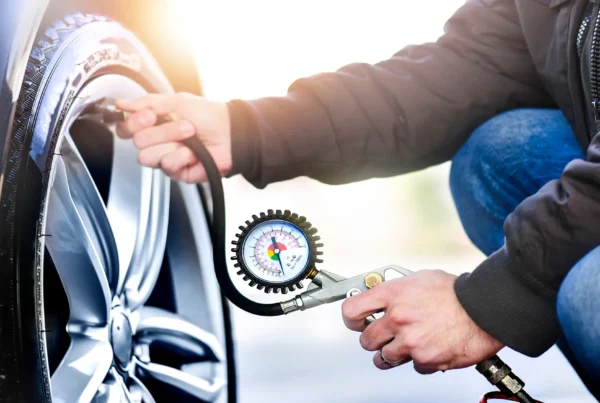
- Wear patterns caused by air, not angles. Bridgestone recommends checking the pressure in all your tires, including the spare, every month, and replacing tires at 2/32-inch tread depth. Get the pressure right first so the wear pattern means what you think it means.
TRIP’s May 2019 Illinois report rated 31 percent of major roads in the Chicago urban area as poor and 27 percent as mediocre. Rough pavement is not itself a reason to align a car, but it is why the parts that hold your angles wear out here faster than the brochure suggests.
How to ask for a wheel alignment in Orland Hills
Searching for an alignment shop near you is the easy part. Handing the service writer the right details is what gets you the right work.
- Name the repair you are already having done, so the alignment goes into the same visit rather than a second trip.
- Describe the symptom precisely. Pulling, vibrating, and an off-center steering wheel point at three different systems.
- Say when it happens: always, only above a certain speed, or only under braking.
- Mention anything that changed the ride height, including a kit, new springs, or a heavy load.
- Ask for the before and after readings. Any shop doing the work properly already has them.
- Ask about cost directly. What an alignment involves depends on the vehicle, on whether the rear is adjustable, on whether ADAS recalibration applies, and on what the measurement turns up, so the only accurate number is a current one. Request a quote with your year, make, and model and you will get a real answer instead of a guess.
Get it measured before your next set of tires pays for it
If new tires, struts, tie rods, control arms, or a ride-height change are on your list, add the measurement to the same appointment and let the numbers tell you whether anything needs adjusting.
Our ASE-certified technicians in Oak Forest, Orland Hills, and New Lenox handle four wheel alignments, tires, and the suspension and steering work that goes with them for drivers across Cook and Will County. Request a quote and we will tell you exactly what your vehicle needs and what it takes to put it back in spec.