Do new brake pads need new rotors? Sometimes. Replacing the pads alone does not settle the question. For drivers in Oak Forest and the surrounding south suburbs, the useful question is whether each existing rotor still meets the vehicle’s specifications and has a suitable braking surface.
A technician can often keep a rotor that is thick enough, in good condition, and free of a braking problem that calls for correction. Brake rotor replacement becomes the better recommendation when a rotor is below its limit, damaged, or cannot be resurfaced while remaining within specification. An inspection should decide the work.
When can new pads go on existing rotors?
Pads and rotors wear together, but they do not necessarily reach their service limits at the same time. If the pads are due for replacement and the rotor faces are sound, the technician can compare rotor measurements with the specifications for that vehicle. If the rotors meet those limits and there is no relevant symptom or damage, keeping them may be appropriate.
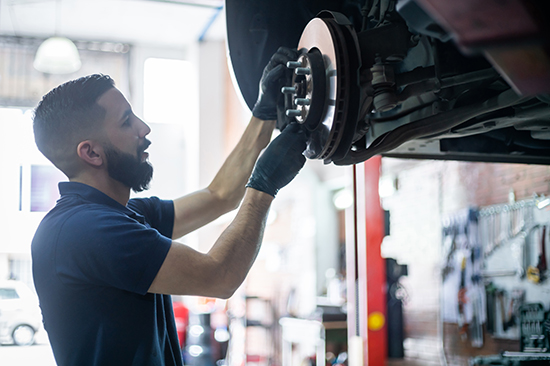
A pad-only recommendation should cover the rotors on the axle being serviced, not just the side that first drew attention. Ask the technician whether both rotors were inspected and whether the two faces of each rotor agree with the proposed repair. If one rotor needs work, the other still deserves its own measurement and surface check. That is more informative than assuming the two sides are identical.
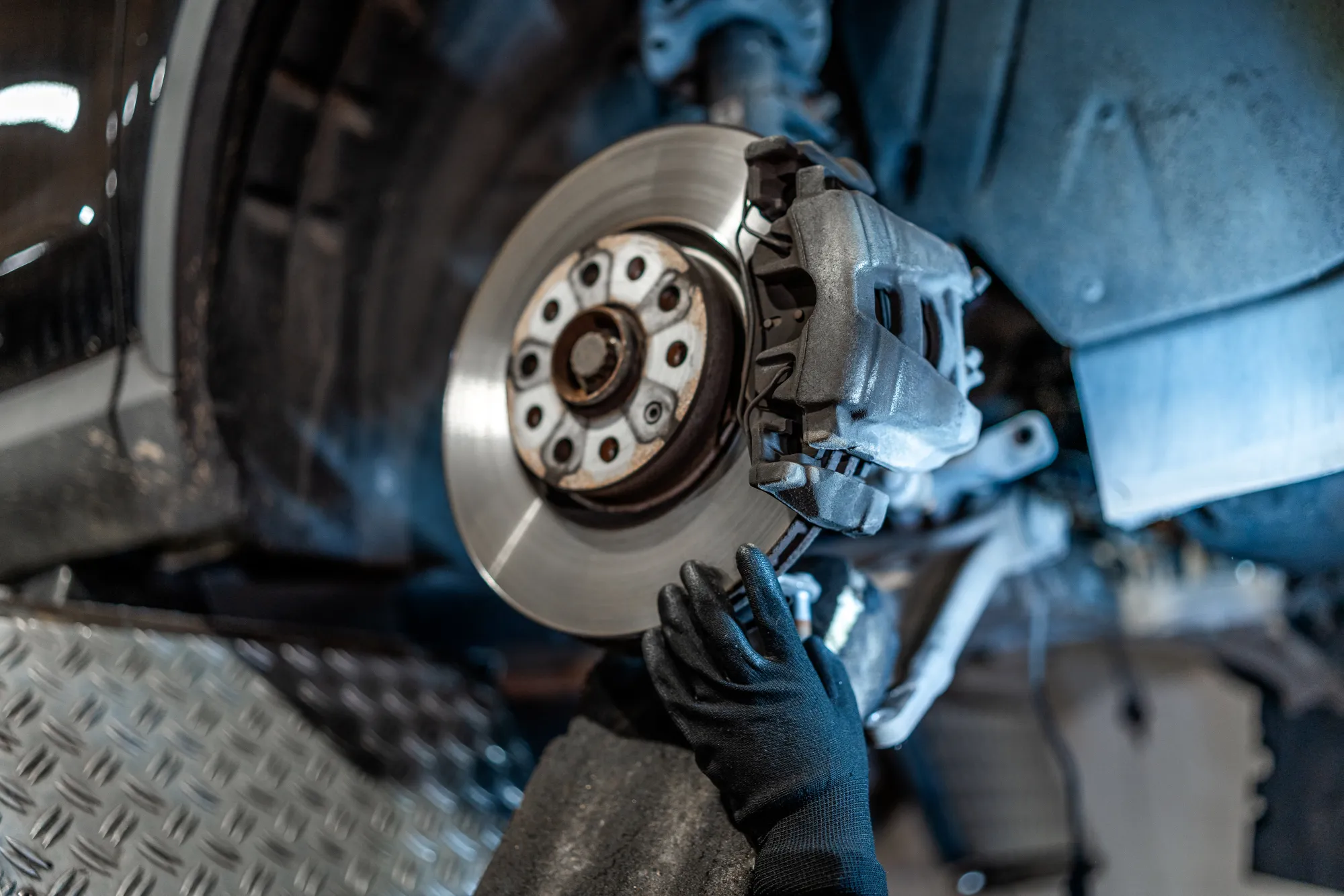
The condition of both faces matters. A rotor can look acceptable through the wheel while its inboard face tells a different story. A technician should check for deep scoring, uneven wear, cracks, and other visible damage. Light marks alone do not settle the decision; their depth and the rotor’s remaining material matter.
Your description of how the brakes feel also helps. Pulsation through the pedal, a pull while braking, or grinding calls for a closer look before anyone promises a pad-only job. Those symptoms can have more than one cause. De Re Tire & Auto lists them among the reasons to have the brake system inspected; its guide to checking brake condition can help you describe what you notice.
What does a technician measure before recommending rotors?
A useful inspection report separates observations from measurements. A groove or patch of uneven contact is something the technician can show you. Thickness and runout require tools and comparison with a specification. Keeping those findings separate makes it easier to understand why a rotor can stay, needs correction, or should be replaced.
The starting point is rotor thickness. A technician measures the disc at appropriate points and compares the result with the specifications for that vehicle and rotor. The important number is the measured thickness relative to the applicable limit, not a generic rule of thumb. Thickness that varies around a rotor can also help explain a pulsating pedal.
A technician also looks at the friction surfaces on both sides. Grooves, uneven contact, heat damage, corrosion, or a crack can change the recommendation even when a single thickness reading seems acceptable. If a driver reports pulsation, the inspection may include a check for lateral runout, which describes side-to-side movement as the rotor turns. The findings must be compared with the vehicle’s specifications; appearance alone cannot establish runout or thickness variation.
Finally, the pads are part of a system. A sticking caliper or uneven pad wear can point to a problem that a new rotor by itself would not solve. De Re Tire & Auto’s brake inspections cover pads, rotors, and calipers, so a recommendation can address what the technician actually finds.
When is resurfacing an option, and when is replacement needed?
Resurfacing removes a small amount of metal to create a suitable rotor surface. It is an option only if the rotor is eligible to be machined and its finished thickness would remain above the applicable machining limit. The technician needs enough material left to correct the surface without going below that limit. A rotor that is already too thin cannot be rescued by machining.
There is a practical difference between a rotor that needs a cleaner surface and one that no longer has enough usable material. Resurfacing addresses the former only when the rotor qualifies. It cannot add material back to a thin rotor or remove a crack. If a rotor has more than one concern, ask which finding decides the recommendation.
Replacement is the likely route when thickness is below the applicable limit, a crack or other damage rules out reuse, or machining would leave too little material. Significant scoring or an uneven surface may also lead to replacement if it cannot be corrected within specification. The condition of the rotor drives the decision.
Whether resurfacing is available for your particular brake job is a separate question. De Re Tire & Auto lists brake inspection and pad and rotor replacement among its brake services; ask the shop whether machining is offered or suitable for your vehicle. If a rotor needs correction and resurfacing is not appropriate, replacement may be the practical recommendation.
What should you ask before approving brake rotor replacement?
Ask the technician to show you the rotor’s measured thickness and the limit used for comparison. If resurfacing is proposed, ask what the finished thickness is expected to be and which limit applies. If replacement is recommended, ask whether the reason is thickness, surface damage, a crack, a braking symptom, or a combination of findings.
If the estimate lists rotors, ask the shop to distinguish required replacement from work it recommends because of the surface or a braking symptom. You can also ask what would happen if the existing rotors were kept. The answer should refer to this vehicle’s measurements and inspection, rather than a general policy. If the technician recommends resurfacing, confirm that the service is available and that the rotor would meet the relevant limit afterward.
It is also reasonable to ask whether the issue affects one rotor or both on that axle, and what the pad and caliper inspection showed. That gives you a clear reason for each part of the proposed work. For a current quote, give the shop your vehicle details and the inspection findings.
New pads do not automatically mean new rotors. A careful inspection determines whether the existing rotors can stay, qualify for resurfacing, or need replacement.