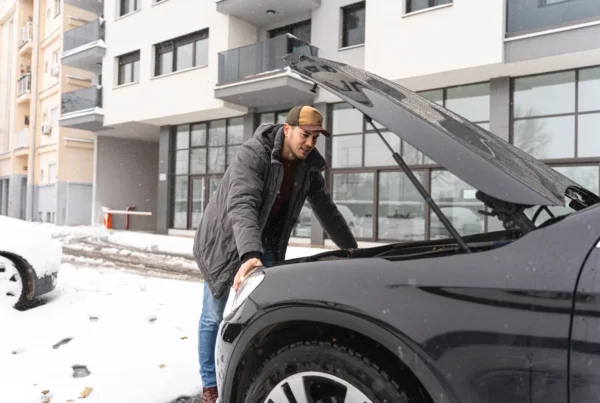
Nobody plans to break down. You plan to get the kids to practice in Mokena, get to work in Tinley Park by 8, get out to Frankfort before the traffic builds. Then something starts making a noise, and you turn the radio up a little, and three weeks later you are sitting on the shoulder of I-80 with your hazards on, waiting for a tow.
Here is the good news: cars almost never fail without warning. They tell you first. The noise, the smell, the little shimmy in the steering wheel at 55 mph, the light on the dash you have been ignoring since March. Those are the car warning signs that matter, and most of them start out as small, affordable repairs. It is the waiting that turns a $180 fix into a $1,400 one.
Below are the seven car warning signs we see most often at our New Lenox, Oak Forest, and Orland Hills shops, what each one usually turns out to be, and how quickly you should get it looked at. If you have been searching for auto repair near me and putting off the call, this is the article that tells you which symptoms can wait until Saturday and which ones mean you should stop driving today.
1. Squealing, Grinding, or Groaning When You Brake
What you hear: A high squeal when you come to a stop. Or worse, a low metal-on-metal grinding, like a shovel dragged across concrete.
What it usually is: Brake pads. A squeal usually means the wear indicator built into the pad is touching the rotor, which is your car’s built-in way of saying the pads are getting thin. Grinding means the pad material is gone and metal is now cutting into the rotor. If you are not sure how far along yours are, here is how to determine the condition of your brakes at home.
How urgent: Squealing gets you a week, maybe two. Grinding is now. Once you are into the rotors, a straightforward pad replacement turns into pads plus rotors, and sometimes a caliper. Your stopping distance is getting longer every day too, which matters a lot in the stop-and-go on Cicero Avenue and along LaGrange Road.
There is another version of this one worth knowing: brakes that feel fine, but the pedal sinks slowly toward the floor while you sit at a red light. That is usually a hydraulic problem rather than a worn pad, and it needs brake service right away.
2. A Vibration or Shimmy That Shows Up at Speed
What you feel: The steering wheel buzzes or shakes, usually somewhere between 45 and 65 mph. Or the whole car feels like it is rolling on something square.
What it usually is: Tire and wheel problems first. An out-of-balance wheel, a tire with a belt starting to separate, a bent rim from a pothole, or wheels that are out of alignment. If the vibration shows up only when you brake, look at warped rotors instead. If it happens at idle, in park, you are looking at an engine misfire or a bad mount.
How urgent: Within a week or two, and sooner if it is new and getting worse fast. A shimmy is rarely dangerous by itself, but a separating tire belt can turn into a blowout, and chewing through the inside edge of two tires because the alignment is off gets expensive in a quiet way. Roads around Will and Cook County earn this one every spring. If you have hit a real Chicago-winter crater lately, it is worth reading up on how potholes damage a vehicle and what to check afterward.
3. A Check Engine Light That Is On, or Worse, Blinking
What you see: The little engine outline on your dash, steady or flashing.
What it usually is: Anything from a loose gas cap to a failing oxygen sensor, a misfiring cylinder, or a catalytic converter on its way out. The light itself is not the diagnosis, it is a request for one. The car has stored a code explaining what it noticed, and any decent shop can pull that code in a few minutes.
How urgent: A steady light means make an appointment this week. A flashing check engine light means stop driving as soon as it is safe. Flashing usually indicates raw fuel is reaching the exhaust, which cooks a catalytic converter fast. A misfire that would have been a $200 coil-and-plug job becomes a converter replacement in the four figures.
Do not let a shop tell you the code alone is the answer. A code points at a system. Testing tells you which part in that system actually failed.
4. Smells That Do Not Belong
Your nose is a genuinely good diagnostic tool. A few worth knowing:
- Sweet, syrupy smell, maybe with fog on the windshield. Coolant. You have a leak somewhere in the radiator, a hose, or the heater core. Coolant loss leads to overheating, and overheating leads to head gaskets, which is the repair nobody wants.
- Hot, sharp, burning smell after driving. Often oil dripping onto the exhaust, or a slipping belt. Sometimes brakes that are dragging.
- Rotten eggs. Usually the catalytic converter, or on older vehicles, a battery venting.
- Gasoline inside the cabin. Treat this as urgent. A fuel leak near a hot engine is a fire risk, not an inconvenience.
- Musty, gym-bag smell from the vents. Less scary. Usually mold in the A/C evaporator or a filthy cabin air filter, and a straightforward A/C service clears it up.
How urgent: Gas smell, today. Sweet coolant smell, this week, and keep an eye on your temperature gauge in the meantime. Musty vents, whenever it suits you.
5. Puddles, Drips, and Spots on the Driveway
What you see: A stain on the garage floor where you park.
What it usually is: Read the color.
- Clear and watery in summer is almost always A/C condensation, which is normal.
- Amber or dark brown, slick to the touch, is engine oil.
- Red or pink is transmission fluid or power steering fluid.
- Green, orange, or bright yellow, slightly slimy, is coolant.
- Clear and oily near a wheel is brake fluid, and that one is a stop-driving situation.
How urgent: Depends entirely on the fluid and the size of the spot. A pinhead of oil once a week is a watch-it item you mention at your next oil change. A spot the size of a dinner plate every night is a repair. Brake fluid is never a wait-and-see.
The cheap move here is a piece of cardboard under the car overnight. It tells you the color and roughly where on the car the leak is starting, and that saves diagnostic time when you bring it in.
6. The Car Pulls, Wanders, or Feels Loose in the Steering
What you feel: You have to hold pressure on the wheel to keep going straight. The car drifts toward the shoulder. Or the steering feels vague and disconnected, and you find yourself making small corrections constantly.
What it usually is: Alignment, tire pressure that is uneven side to side, or a worn suspension and steering part such as a tie rod end, ball joint, or control arm bushing. A hard pull that only happens under braking usually points back at the brakes, often a sticking caliper.
How urgent: A mild pull, a week or two, and do not skip it, because misalignment quietly shaves thousands of miles off a new set of tires. Anything you would describe as clunking, loose, or sloppy should be inspected right away. Steering and suspension parts hold your wheels to your car, and they do not fail politely.
While the car is up on the lift, this is also a natural moment to have someone check tread depth and wear pattern. Wear that is heavier on one edge is your alignment telling on itself. If you want to get ahead of it, here is how to get the most life out of a set of tires.
7. Hard Starts, Rough Idle, or a Loss of Power
What you notice: The engine cranks longer than it used to. It idles unevenly at a stoplight. It hesitates when you merge onto I-80 or I-355, or the fuel economy has quietly gotten worse over a couple of months.
What it usually is: Spark plugs and ignition coils, a clogged fuel filter, a dirty mass airflow sensor, a weak battery or corroded terminals, or a car that is overdue for a tune up. Cold weather exposes all of it. A battery that is marginal in October is a no-start in January, and in the South Suburbs January is not theoretical.
How urgent: Not usually a safety issue, but do not let it ride. Hesitating on an on-ramp is its own kind of dangerous, and these are among the cheapest repairs on this whole list if you catch them early. A battery test costs nothing. A tow off I-80 costs plenty.
Which Car Warning Signs Can Wait, and Which Cannot
Bring it in today if you have:
- Grinding brakes or a brake pedal that sinks
- A flashing check engine light
- The smell of gasoline in the cabin
- Steam, smoke, or a temperature gauge climbing into the red
- Clunking or loose steering
- Clear oily fluid near a wheel
Make an appointment this week for:
- Squealing brakes
- A steady check engine light
- A new vibration at highway speed
- A sweet coolant smell or a growing puddle
- A pull to one side
- Hard starts or a rough idle
Mention it at your next oil change for:
- A tiny occasional drip
- Musty air from the vents
- A rattle you only hear on gravel
- Wipers, bulbs, and other small stuff
Why Waiting Costs So Much More Than Fixing
Almost every expensive repair we see started out as an inexpensive one. Brake pads become rotors and calipers. A leaking hose becomes an overheated engine and a head gasket. A misfire becomes a catalytic converter. A worn tie rod end becomes two ruined tires. The part rarely fails alone. It takes its neighbors with it.
Then there is the timing. A repair you schedule happens on a weekday, at a shop you chose, with a quote in front of you and a ride home arranged. A breakdown happens at 6:40 on a Friday on I-80 near Joliet, in the rain, with a tow bill on top of the repair and no say in who touches your car. Same part. Very different day.
How to Pick a Mechanic Near Me Before You Actually Need One
The best time to look for a mechanic near me is when nothing is wrong. When you are stranded, you take whoever answers. When you are not, you get to be picky. Whichever shop you call up when you search for auto repair near me, here is what is worth looking for:
- They put the diagnosis in writing and explain what they tested, not just what they replaced.
- They show you the old part or the worn pad, and they are happy to walk you out to the lift.
- They tell you what can wait. A shop that says “this one is fine for another year” has earned some trust.
- They stand behind the work with a written warranty on parts and labor.
- They are close to home. Convenience is not a small thing when you need a ride back to Orland Park or Homewood.
At De Re Tire & Auto we have been doing this in Chicago’s South Suburbs for a long time, out of New Lenox, Oak Forest, and Orland Hills. Tires and brakes are what we are known for, but the same technicians handle auto repair and tune ups, oil changes, A/C work, batteries, and the diagnostic work that turns a mystery noise into a plain-English answer. We also service small fleets around Will and Cook County, because a work truck sitting still is losing money.
Most of this list stays off your driveway with routine service. Here’s how often you actually need an oil change if you drive the South Suburbs.
Do Not Wait for the Tow Truck
If your car has been telling you something for a few weeks, you already know it. Trust the noise, the smell, the shimmy. Getting it checked is usually cheaper, faster, and far less dramatic than what happens if you wait.
Ready to get it looked at? Schedule an appointment at the De Re Tire & Auto location nearest you in New Lenox, Oak Forest, or Orland Hills, and let us take a look before it turns into a tow.