
There are two ways to lose money on oil changes, and most drivers are doing one of them.
The first is paying for oil you didn’t need. At 3,000-mile intervals and 12,000 miles a year, that’s four services annually. On a car engineered for 7,500, two would have covered it. Over ten years, that’s twenty oil changes your engine never asked for.
The second mistake is cheaper today and far more expensive later. Stretch conventional oil to 12,000 miles because you read somewhere that modern engines can take it, and you’re betting a $6,000 engine against a $60 service.
Neither mistake comes from carelessness. They come from the fact that nobody hands you a straight number. Your dad says 3,000 miles. The sticker on your windshield says 5,000. The dashboard light says whenever it feels like it. The owner’s manual, sitting unopened in the glove box, says something different from all three.
So here’s how to find the number that’s actually yours, and why driving around New Lenox, Oak Forest and Orland Hills moves it.
The 3,000-Mile Rule Is Retired
The 3,000-mile oil change was good advice once. In the 1970s and 80s, engines ran hotter on simpler oils that broke down quickly, and filters didn’t catch as much. Change it every 3,000 miles or pay for it later.
Modern engines are different machines. Tighter tolerances, better sealing, and computer-controlled fuel delivery that keeps unburned gas out of the crankcase. Today’s motor oils are also far more stable, with detergent and anti-wear additives that hold up thousands of miles longer than anything you could buy a generation ago.
Most vehicles built in the last fifteen years are engineered for intervals between 5,000 and 10,000 miles. Some full-synthetic applications stretch to 15,000. Sticking to 3,000 miles won’t hurt anything mechanically, but it does mean you’re buying two or three oil changes a year your engine never needed, and sending used oil off for recycling for no reason.
The flip side is the one that costs money. Some drivers hear “modern cars go 10,000 miles” and stretch it to 12,000 or 15,000 on conventional oil. The correct answer isn’t a single number. It depends on what oil you use and how you drive around Will and Cook County.
How Often to Change Oil by Type: Conventional, Synthetic Blend, or Full Synthetic
Oil type is the biggest single factor in how far you can safely go. Here’s the plain-English version.
Conventional oil is refined crude, the traditional stuff. It lubricates well and costs the least per change, but its molecules are irregular in size and it breaks down faster under heat. Typical interval: 3,000 to 5,000 miles. It still makes sense for older, high-mileage engines and for vehicles specifically spec’d for it.
Synthetic blend mixes conventional and synthetic base oils. You get better heat resistance and cold-weather flow than straight conventional, at a moderate price. Typical interval: 5,000 to 7,500 miles. That makes it the middle-of-the-road pick for a lot of commuters and family vehicles.
Full synthetic is engineered in a lab, with uniform molecules and a much stronger additive package. It flows better on a frigid January morning in Mokena, resists breakdown under sustained heat, and keeps engine internals visibly cleaner. Typical interval for a synthetic oil change: 7,500 to 15,000 miles, depending on the vehicle. It costs more per visit, but you make fewer visits, so the yearly cost often comes out close to even.
One thing worth flagging: many newer vehicles, especially turbocharged engines and most European models, require full synthetic. That isn’t an upsell. Turbochargers spin at enormous speed and run extremely hot, and conventional oil can literally cook onto internal surfaces. If your manual specifies full synthetic, use full synthetic. On a vehicle that calls for it, a synthetic oil change at the right interval is about the cheapest engine insurance you’ll ever buy.
Where Your Actual Number Is Written Down
Skip the internet arguments. Your vehicle’s engineers already answered this question. Here’s where to look.
- The owner’s manual. Check the maintenance schedule section. Nearly every manual publishes two columns: a normal schedule and a severe service schedule. More on that in a minute.
- The oil cap or a sticker under the hood. A lot of manufacturers print the required viscosity (5W-20, 0W-16, 5W-30) right on the cap.
- Your oil life monitoring system. Most vehicles built after roughly 2010 have one, and it isn’t the simple mileage countdown most drivers assume. It’s an algorithm watching engine revolutions, operating temperature, cold starts, idle time and trip length, then estimating how much useful life your oil has left. When it reads 15%, take it seriously and book service.
- Your service records. If you’ve been going to the same shop, they already know your vehicle, your mileage pattern, and what oil is in there now.
A good shop looks this up for you instead of defaulting to a one-size-fits-all sticker. If you’re searching for an oil change near me in Tinley Park, Frankfort or Homewood and the first question you get is “what’s the year, make and model?”, that’s a good sign. Our oil change service page lists what we check on every visit.
Why South Suburbs Driving Counts as “Severe Service”
Here’s the part most drivers miss. That second column in the manual, the severe service schedule, sounds like it’s meant for people who race on weekends or drive through the desert. It isn’t. Read the actual definitions and you’ll find they describe an ordinary week in the South Suburbs.
Severe service usually includes:
- Frequent short trips, especially under 10 miles. School drop-off in Frankfort, a run to the store in Tinley Park, back home. The engine never fully reaches operating temperature, so moisture and fuel residue that would normally burn off just sit in the oil, diluting it and encouraging sludge.
- Extended stop-and-go driving. Sitting on La Grange Road, backed up on Route 30, or crawling along I-80 at rush hour racks up engine hours without racking up miles. Your odometer says you barely drove. Your oil disagrees.
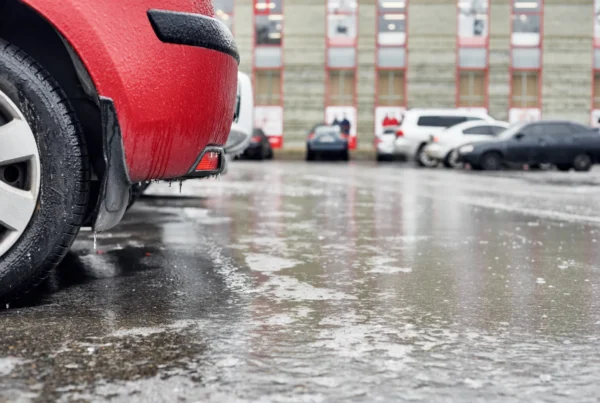
- Extreme temperatures, hot and cold. Chicago delivers both, generously. Subzero January mornings thicken oil so it’s slow to reach the bearings at startup, and 95-degree August traffic pushes oil temperatures the other direction. Winter is especially punishing when you pair cold starts with short trips, which is exactly what most of us do from December through March.
- Towing or hauling heavy loads. A boat headed out to the lake, a camper, a loaded trailer for a weekend project. Towing raises engine load and oil temperature quite a bit.
- Dusty or salted roads. Our winter road salt and spring construction dust are harder on filters than clean highway air, and the same beat-up pavement that chews up oil life is rough on your suspension and wheels too.
If two or more of those describe your driving, use the severe schedule. In practice that usually means trimming the interval by 25% to 30%. A 7,500-mile full synthetic becomes 5,000 to 6,000, and a 5,000-mile conventional becomes 3,500 to 4,000.
There’s some irony in that. The person putting 25,000 highway miles a year on a car is often easier on oil than the parent doing 7,000 miles of five-minute trips around Orland Park. Miles are a rough proxy. Conditions are the real measure.
What a Real Oil Change Includes
An oil change is the most common reason a trained technician has your vehicle up in the air. That’s a valuable half hour, and a quick drain-and-fill wastes most of it. Beyond fresh oil and a new filter, a proper service should include:
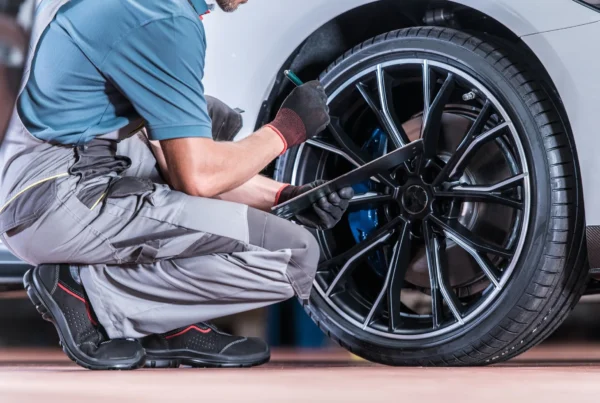
- A tire inspection and pressure check. Tread depth, uneven wear patterns, and pressures set to the door-jamb spec rather than the number on the sidewall. Cold Chicago mornings drop pressure noticeably, and steady pressure is one of the simplest ways to get more life out of your tires.
- A brake look. With the wheels accessible, a technician can eyeball pad thickness and rotor condition and tell you roughly how much life is left before it turns into a repair. If you want to know what to listen and feel for between visits, here’s how to determine the condition of your brakes.
- A fluid top-off and check. Coolant, brake fluid, power steering, washer fluid, and transmission where the vehicle allows checking it.
- A belt and hose check. Cracking, glazing, soft spots and leaks show up here long before they strand you on the shoulder of I-355.
- Battery and charging test. Especially valuable heading into a Chicago winter, when a weak battery finally quits on the first truly cold morning.
- Wipers, lights and air filters. Small items, quick to catch, easy to fix while the car is already there.
- A straight answer about what’s next. Not a list of scare-tactic upsells, just a clear picture of what’s fine, what to watch, and what genuinely needs attention soon.
That last one separates a neighborhood shop from a quick-lube bay. You should leave knowing more about your vehicle than when you arrived.
Signs You Shouldn’t Wait for the Interval
Sometimes your vehicle tells you before the mileage does. Get it looked at promptly if you notice:
- The oil pressure warning light coming on, ever, even briefly. Pull over safely and shut the engine off.
- Oil on the dipstick that feels gritty, or that’s so dark and thick you can’t read the level.
- The oil level sitting low between changes, which points to a leak or oil consumption worth diagnosing.
- A ticking or tapping from the engine at startup that fades as it warms up.
- Dark spots on your driveway or garage floor.
- A burning oil smell after driving.
None of those are reasons to panic. All of them are reasons not to wait another two months.
Oil is only one of the systems that warns you before it fails. Here are seven warning signs your car needs a mechanic that are worth knowing between oil changes.
What to Remember
- The 3,000-mile rule is outdated for most modern vehicles, though a 10,000-mile interval isn’t automatic either.
- Conventional runs roughly 3,000 to 5,000 miles, synthetic blend 5,000 to 7,500, full synthetic 7,500 to 15,000.
- Your owner’s manual and your oil life monitor beat any general rule of thumb.
- Short trips, stop-and-go traffic, brutal winters and towing all count as severe service, and most South Suburbs driving hits at least two of them.
- A real oil change is an inspection, not just a drain and fill.
Whatever your interval turns out to be, the best thing you can do is keep it consistent and write it down. An engine that gets clean oil on schedule routinely runs past 200,000 miles. One that gets it whenever somebody remembers usually doesn’t.
Not sure which oil your vehicle takes, or when it’s actually due? Bring it to De Re Tire & Auto in New Lenox, Oak Forest or Orland Hills. We serve drivers all over the South Suburbs, from Mokena and Frankfort to Tinley Park, Orland Park and Homewood. We’ll look up the factory specification, ask how and where you drive, and give you a straight recommendation instead of a sticker with an arbitrary number on it.
Schedule an appointment at the location nearest you, and let’s get your engine on a schedule that fits how you actually drive.