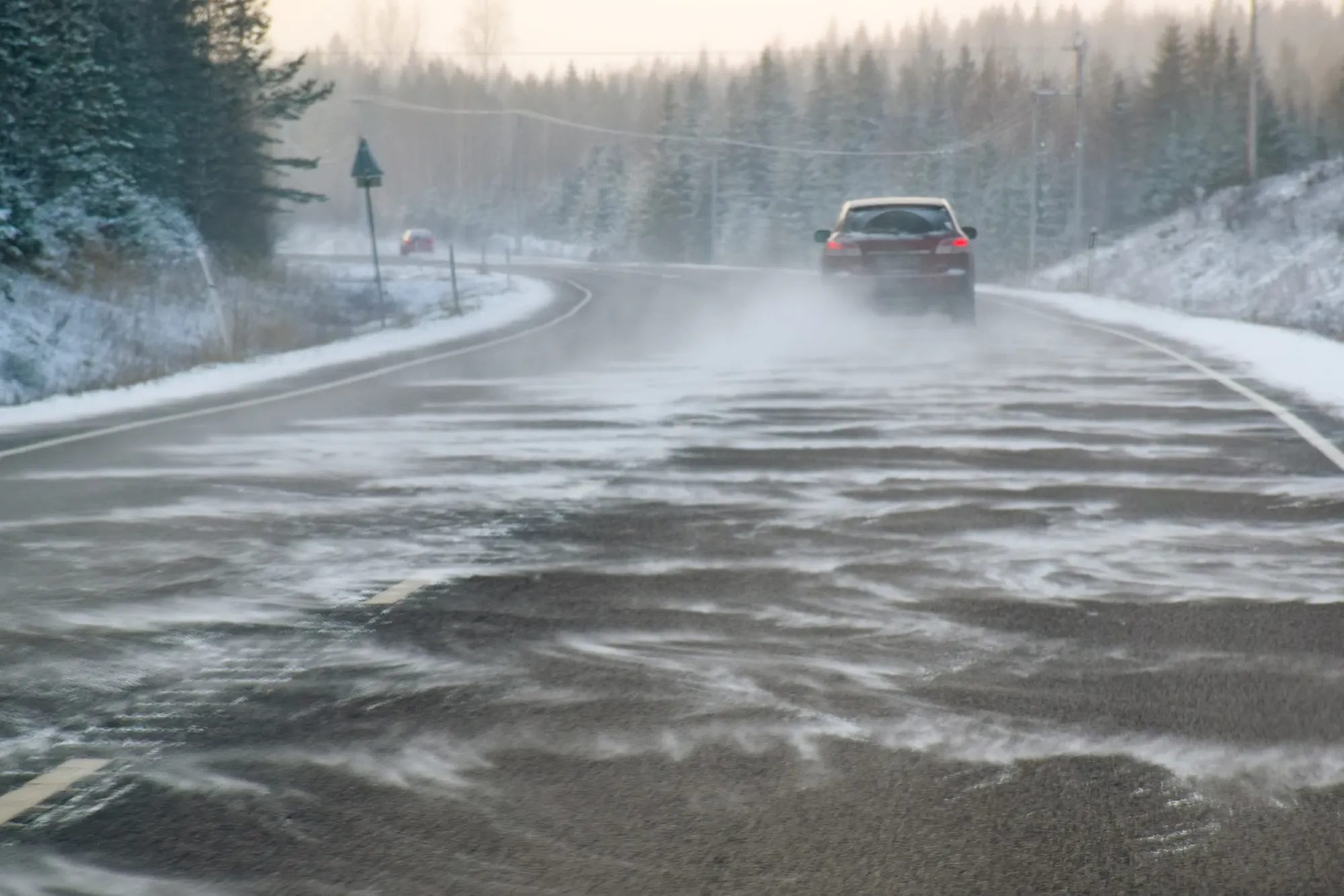
Most of us judge a car by what we can see. The paint looks fine, the tires look fine, nothing rattles, so we figure it came through winter in one piece. But the part of your vehicle that takes the worst beating between December and March is the part you never look at: the underside. Months of salt brine thrown up off I-80, I-57 and 159th Street settle into seams, cling to steel lines, and sit in places that never fully dry out.
Almost all the road salt car damage Chicago drivers run into is invisible from the driver’s seat, which is why it goes unaddressed until something fails. We have organized this by the components that actually give out, based on what comes through our bays in Oak Forest, Orland Hills and New Lenox from drivers all over Tinley Park, Orland Park, Mokena, Frankfort, Midlothian and Crestwood. Some of it is cosmetic. One item on this list is a genuine safety issue.
Undercarriage rust in the South Suburbs starts before the first snowfall
Illinois does not go light on de-icer, and the numbers make that plain. The Illinois Department of Transportation used more than 522,000 tons of road salt during the 2021-2022 winter, up from nearly 430,000 tons the winter before. Chicago’s Department of Streets and Sanitation went through more than 322,000 tons in the 2020-2021 winter on its own. IDOT keeps over 1,221 plow routes running day and night, most of them 15 to 50 miles long.
Here is the part that surprises people. Salt does not wait for snow. IDOT pre-wets its rock salt with liquid chemicals like salt brine or beet juice so it sticks to the pavement instead of bouncing into the shoulder, and it treats bridges with brine two to three times a week just to keep frost from forming. The road is already chemically wet before the first flake falls, so the corrosion clock starts earlier in the season than most drivers assume.
Exposure is not spread evenly, either. IDOT salts when pavement temperatures are 15 degrees or above, uses additives when it gets colder, and generally stops treating below 5 degrees. That means the heaviest applications land during the wet, slushy, just-around-freezing stretches when spray gets everywhere. Someone commuting I-80 toward Joliet or up I-57 every weekday collects far more brine than a neighbor running short errands around Orland Hills or Midlothian. Two identical cars of the same model year can have very different undersides, and where those miles were driven is the reason.
Our winters work on the pavement too, so the underside takes a double hit. Salt eats at the metal while potholes chip away the protective coatings that were slowing the salt down.
Brake line corrosion in Illinois: a safety item, not a cosmetic one
Of everything under your vehicle, this is the one to take seriously.
Brake lines are steel tubes carrying fluid under high pressure from the master cylinder out to each wheel. Brine spray settles on the outside of those lines, especially the long runs to the rear, and pits them from the outside in. The line looks intact right up until the wall gets thin enough to open a pinhole. Then you press the pedal, pressure escapes instead of clamping the brakes, and the pedal goes soft or drops to the floor. There is often no gradual warning the way there is with worn pads.
Brake line corrosion in Illinois is not a theory, and it is not a niche complaint. Federal regulators spent five years, from 2010 to 2015, investigating rusting brake pipes on roughly 5 million model year 1999-2007 Chevrolet, Cadillac and GMC pickups and SUVs. The investigation opened after a March 2010 complaint from an Ohio owner whose 2003 Silverado was leaking brake fluid from corroded pipes. By the time it closed, NHTSA had logged 3,645 brake pipe rust complaints, including 107 crash reports and 40 injury reports, with 75 percent of them coming from the 1999-2003 model years.
Two details from that investigation matter to anyone reading this in Cook or Will County. First, regulators concluded the rust came from road salt exposure rather than a manufacturing defect. There was no recall, because there was nothing defective to recall. Second, the investigation covered 20 cold-weather states plus Washington, D.C., and Illinois is on that list. If you drive an older truck or SUV that has spent every winter here, you are looking at the exact profile in those complaint files.
NHTSA’s advice to owners was straightforward: get the undercarriage washed several times during and after winter, and get brake lines inspected for rust and replaced if necessary. That is what a brake inspection is for.
Fuel and fuel-vapor lines run through the same weather in the same neighborhood of the vehicle, and they deserve the same look while the car is up on the lift.
Seized caliper slides and parking brake cables
The second category is corrosion in parts that are supposed to move, and it usually shows up as a brake complaint rather than a rust complaint.
A disc brake caliper has to slide slightly on its mounting pins so both pads press evenly on the rotor. When those pins rust and bind, the caliper stops floating. The inner pad does all the work and wears down to nothing while the outer pad still looks close to new. Drivers rarely notice the cause. They notice a pull to one side, a hot wheel, or a brake job that seems to have failed early.
Parking brake cables are the other classic. The cable rides inside a housing, and once salt and moisture get in and corrode it, the cable can pull the brake on and then fail to release it cleanly. The brake holds fine, which is why people assume it is healthy, but one rear wheel drags after you take it off. That is a corrosion problem rather than a brake problem, and the fix is the cable.
Watch for these:
- Uneven pad wear side to side, or inner-to-outer on the same wheel
- A pull under braking, or one wheel noticeably hotter after a drive
- A parking brake that engages but does not fully release
- A dragging or rubbing sound from one corner that eases up after a few miles
- Squealing that does not track with pad thickness
Any of these is worth having looked at. Our guide to how to determine the condition of your brakes walks through the everyday symptoms in more detail.
Rocker panels, subframe mounts and structural rust
Undercarriage rust in the South Suburbs is not spread evenly across a vehicle. It concentrates wherever salty water gets in, sits, and never gets a chance to dry: inside rocker panels, in the seams behind the front wheels, around suspension and subframe mounting points, and in the pockets and channels nobody ever scrubs out.
Rocker panels are the low body sections running under the doors, and they rust from the inside out. By the time you see bubbling or blistering paint along that seam behind the front wheel, the steel underneath has been working on itself for a while. That is a symptom, not a paint defect, and touching up the paint does nothing about what is behind it.
Subframe and suspension mounting points matter more than the body panels do. Those are the places where control arms, cradles and suspension components bolt to the structure of the vehicle, and they are what keeps your alignment and handling predictable. Heavy corrosion there moves the conversation from appearance to structural integrity, which is why a technician looks at those mounts specifically instead of just glancing at the floor pans.
AAA points to the undercarriage, brake lines and suspension systems as the areas road salt attacks hardest, along with paint discoloration and chipping. That list matches what we see on the lift every spring.
Corroded electrical grounds and connectors
This is the one almost nobody suspects.
Plenty of electrical circuits on a modern vehicle ground through straps and connectors mounted low on the chassis, right where salt spray lands. Corrosion there adds resistance to a circuit that was designed not to have any. The result is not a clean failure that sets an obvious code. It is intermittent nonsense: a light that flickers, a window or sensor that misbehaves only in wet weather, a warning lamp that appears and clears on its own. Drivers chase the component while the real problem is a ground strap under the car.
Electric vehicles have their own exposure. AAA specifically flags EV battery packs, cooling lines, high-voltage connectors, charging ports and aluminum battery housings as salt-vulnerable, along with the sensors and wiring worth checking after a winter of brine.
Salt damage or normal wear? How to tell
Both look like a car getting older. A few things separate them.
Signs that point at corrosion rather than mileage:
- The symptom is uneven or one-sided. Normal wear happens at similar rates across an axle; corrosion picks one spot.
- A part that should move does not: a caliper that will not float, a parking brake that will not release, a bolt that will not come loose.
- It tracks with the weather. Faults that appear in slush and clear up in July are pointing at moisture and salt.
- Paint is bubbling along a low seam, especially behind a front wheel.
- The pedal feels soft or slowly sinks, with no obvious pad or rotor problem to explain it.
- It shows up on a vehicle that spends every winter on treated interstates, no matter how gently it has been driven.
Mileage-related wear arrives gradually and fairly evenly, and it follows how much you drive rather than what month it is. Several of these overlap with the warning signs that your car needs a mechanic, worth a read if more than one of them sounds familiar.
On a lift, the check is not complicated. A technician traces the brake and fuel lines end to end looking for pitting, flaking and scaling, checks whether the caliper hardware and parking brake cables actually move freely, probes the rocker seams and subframe mounts for soft spots, and inspects ground straps and connectors for the white-green crust that means a bad connection. The point is to find these things while they are still repairs rather than failures.
What actually helps against South Suburbs road salt
You cannot control how much salt goes down on 159th Street. You can control how long it stays on your vehicle.
Wash the underside, on a schedule. AAA recommends washing your vehicle at least every two weeks during winter, and more often after driving heavily salted roads. NHTSA’s guidance runs the same direction: undercarriage washes several times during and after winter, not one rinse in April. Whatever car wash you use, pick the option that actually sprays the underbody. Most drive-throughs around here offer it.
Time it for above-freezing days. A 40-degree February thaw is a gift, and it is the right day to flush the underside. Washing when it is 15 degrees can leave water freezing in your locks, door seals and cable housings, which just creates a fresh problem. Dry the door jambs and rubber seals afterward.
Do the small preventive things. Corrosion-inhibiting coatings help. So does parking indoors when you can. If you drive an EV, keep the charging port clean and dry.
Get the underside inspected in spring, on purpose. This is the part most people skip. When you bring the car in after the salt season, ask for the underbody to be looked at along with the regular service you are already there for. A corroded brake line found on a lift is a scheduled repair. The same line found on I-80 is an emergency, and possibly a crash.
On cost, we will not pretend a blog post can quote you a number. What a corrosion repair takes depends on what the inspection finds: which line or cable is affected, how much of it has to be replaced, how badly the surrounding fasteners have seized, and what the vehicle is. Parts and labor pricing moves too often for a published figure to be honest. Tell us what you are dealing with and we will give you a current quote.
Salt damage is quiet, it is cumulative, and it is genuinely repairable when it is caught early. That is the whole argument for looking underneath before something forces you to.
If you have been searching for someone nearby to check what winter left behind, that is a short conversation and a few minutes on a lift. Request a quote from De Re Tire & Auto or stop by our Oak Forest, Orland Hills or New Lenox shop, and we will show you exactly what is going on under your vehicle.